DupeStack is an independent consumer resource supported by affiliate commissions earned on verified trade and retail links. Disclosure

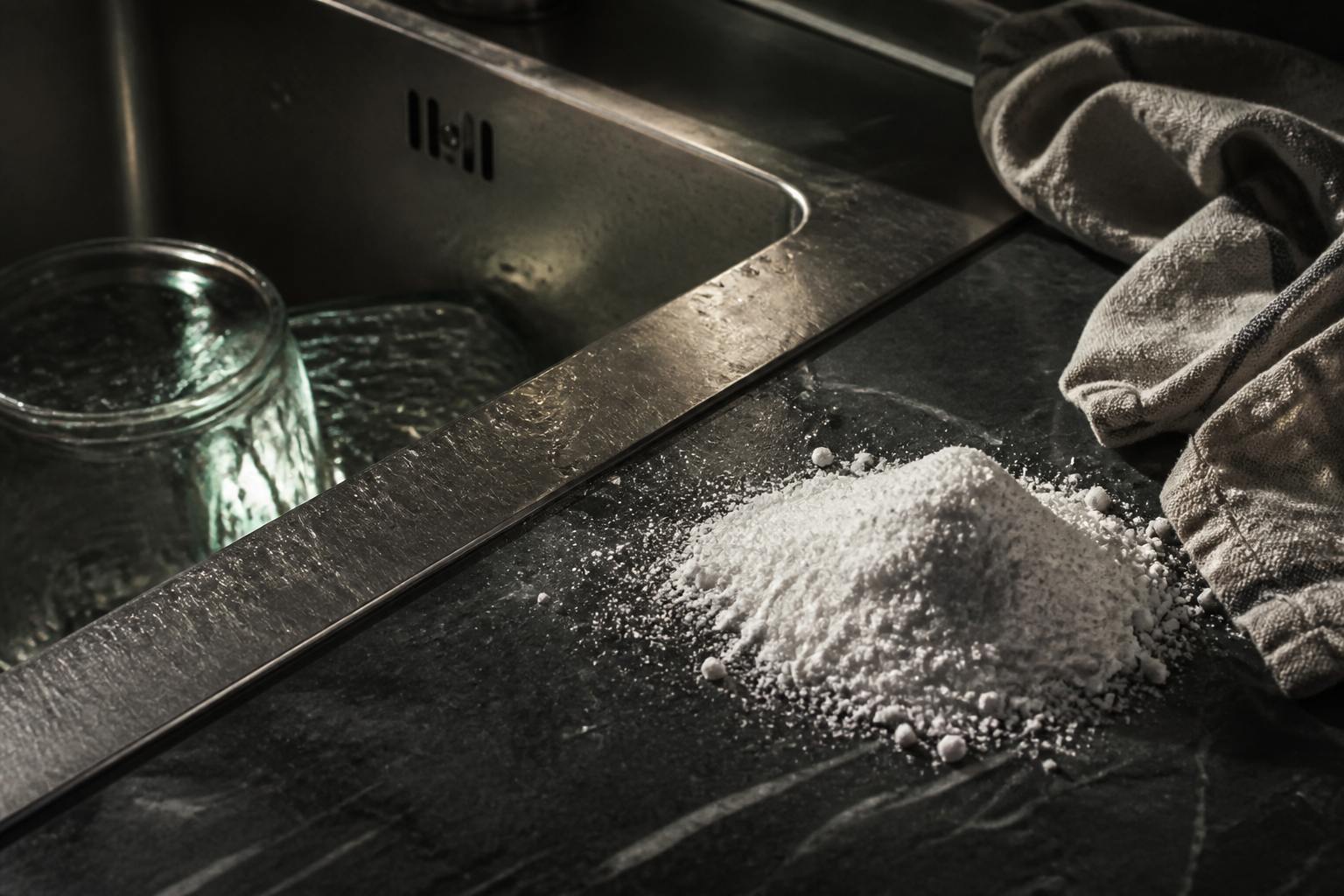
Unbranded cleaning powder beside a stainless kitchen sink

Everyday actives

Cupboard chemistry

Start with what is already on the supermarket shelf — then see what big chem repackages, marks up, and sells back to you. Each card links to a full teardown when we have one.

Odours

Fridge, bin and carpet smells

Supermarket shelf

Bicarbonate of soda (NaHCO₃)

Baking aisle — own-label tub or small shaker

Open tub in the fridge; sprinkle on carpets, leave 20 minutes then vacuum; rinse bin with warm water after a bicarb paste scrub.

Big chem sells

Spa “total alkalinity” tubs, branded deodorising powders

Same pure salt repackaged at spa mark-up — often 10× the per-kilo price of a 25 kg sack.

Honest verdict

Bicarbonate is a mild alkali that absorbs volatile acids and greasy odours. It neutralises smells; it does not disinfect mould or kill bacteria.

Do not mix with acids in a closed container — the fizz is mostly CO₂, not cleaning power.

Stains

Blood, wine and organic fabric marks

Supermarket shelf

Hydrogen peroxide 3% (H₂O₂)

Pharmacy first-aid aisle — Boots and supermarket own-label

Blot the stain, test an inside seam, dab 3% solution, dwell 5–10 minutes, rinse cold. Repeat before heat-drying.

Big chem sells

Branded “oxy” gels and stain pens

Often the same 3% solution with thickeners and perfume — sometimes weaker than the pharmacy bottle.

Honest verdict

Peroxide is an oxidising bleach safe on many whites and colourfast cottons. It fails on grease, rust and some synthetics; it can lighten dyes.

Never mix with vinegar (peracetic acid) or undiluted bleach. Store in a dark bottle — it degrades in light.

StainsGrease & oven

Whites, tea towels and greasy work shirts

Supermarket shelf

Soda crystals + oxygen bleach habit

Soda crystals (sodium carbonate) in laundry aisle; sodium percarbonate as “oxy” powder or from Vanish-style packs

30–50 g soda crystals in a hot wash for grease; 1–2 tbsp percarbonate in warm soak for dingy whites.

Big chem sells

Vanish Oxi Action, laundry “boosters”

Percarbonate is soda ash plus hydrogen peroxide locked in a stable salt — the branded sachet is mostly that, plus perfume.

Honest verdict

Soda crystals cut grease and soften water; percarbonate lifts organic stains. Neither replaces enzyme detergent on protein soils.

Hot water only for soda crystals — it is caustic. Keep powder dry; damp percarbonate loses strength.

Limescale

Kettles, shower heads and taps

Supermarket shelf

Citric acid monohydrate

Homebrew / wine-making aisle, or citric descaler sachets next to kettle filters

30 g in a full kettle, boil, sit 30 minutes, rinse twice. For taps: 50 g per litre warm soak, 15–30 minutes.

Big chem sells

Cillit Bang Limescale, branded kettle descaler sachets

Hard-water scale is calcium carbonate. Citric acid chelates and dissolves it — the trigger bottle is mostly acid, water and dye.

Honest verdict

Citric beats 5% table vinegar on thick kettle fur. It is still an acid: avoid raw marble, limestone and some stone worktops.

Do not mix with bleach. Wear gloves on concentrated soaks.

LimescaleOdours

Light scale, glass and hard-surface smells

Supermarket shelf

Distilled malt vinegar ~5% acetic acid

Pickling / condiments aisle — cheapest own-label

Equal parts vinegar and water in a spray for glass and taps; bowl of vinegar overnight for microwave odours.

Big chem sells

“Limescale destroyer” sprays, scented cleaning vinegars

5% vinegar is weak on a furred kettle but fine for maintenance. Brands sell the same acid with surfactants and perfume.

Honest verdict

Acetic acid dissolves fresh carbonate scale slowly. For heavy fur use citric or sulphamic acid — not more vinegar.

Never mix with bleach (chlorine gas). Do not use on natural stone, unsealed grout or egg stains (sets protein).

Limescale

Toilets, urinals and thick scale

Supermarket shelf

Sulphamic acid

Trade descaler sachets or Fernox-style boiler / system cleaner (read the label)

Follow label — typically 50–100 g per litre warm water, apply to bowl rim and under rim, dwell 20 minutes, brush, flush.

Big chem sells

Fernox DS-3, professional “limescale remover” powders

Sulphamic is the workhorse acid in many trade descalers — retail toilet gels dilute it and add dye.

Honest verdict

Stronger than citric on stubborn urinal scale. Still fails on silicone sealant damage — that is replacement, not chemistry.

Acid — gloves and ventilation. Never mix with hypochlorite bleach.

Mould & mildew

Grout, silicone and bathroom black spot

Supermarket shelf

Sodium hypochlorite bleach ~4–5%

Household bleach aisle — thick or thin original

Neat on grout lines with ventilation; 1:10 for maintenance spray. Leave 5 minutes, rinse, dry the surface.

Big chem sells

Domestos, mould sprays with “active chlorine”

Mould sprays are often hypochlorite plus surfactant — same oxidiser, higher bottle price per litre.

Honest verdict

Bleach kills surface mould and stains the hyphae. It does not fix damp behind tiles; regrowth returns if moisture stays.

Never mix with acids, vinegar, ammonia or toilet descalers — toxic gas. Ventilate; eye protection on sprays.

Mould & mildew

Painted walls and uPVC (when bleach is risky)

Supermarket shelf

Bicarbonate scrub + dry + fix ventilation

Baking aisle bicarbonate; then a branded mould spray if needed

Dry-wipe loose spores, bicarb paste on the mark, rinse, dry fan-heated. Reserve fungicidal sprays for repeat spots.

Big chem sells

Astonish Mould & Mildew, HG mould removers

Many combine hypochlorite or quaternary biocide with surfactant — you are paying for the trigger and the label.

Honest verdict

No spray fixes a cold, unventilated room. Bicarbonate handles smell after treatment; biocide stops quick return on non-porous spots.

Grease & oven

Baked-on oven fat and grill pans

Supermarket shelf

Sodium hydroxide (caustic soda) — or use the branded bag

Oven Pride twin-bag kit (caustic solution) or drain-cleaner-grade crystals from hardware (handle with care)

Commercial kits: place racks in bag, pour solution, seal overnight. DIY crystals need exact label PPE — prefer the kit first time.

Big chem sells

Oven Pride, Mr Muscle oven foams

Oven Pride is essentially caustic soda in a bag with a rack liner — the foam brands add surfactant and perfume.

Honest verdict

Caustic saponifies fat into soap you can rinse. It destroys aluminium and burns skin — not for self-cleaning oven liners.

Full gloves, goggles, no contact with skin. Never mix with acids. Rinse thoroughly before cooking.

Grease & oven

Hob crust, extractor filters and blocked drains

Supermarket shelf

Soda crystals (sodium carbonate)

Laundry aisle — Dripak-style box or supermarket own-label

Strong hot solution (handful in a bowl of water) for filter soak; 50 g in kettle-boiled water down slow drains weekly.

Big chem sells

Branded “degreasers” and drain granules

Many drain products are mostly soda ash plus a dash of surfactant — the crystals do the heavy lifting.

Honest verdict

Alkali cuts grease and soap scum; it will not dissolve hair (needs mechanical clearance or a different chemistry).

Use hot water and gloves — alkaline burns are real. Keep away from acids.

Stains

Rust marks on tools, baths and stone

Supermarket shelf

Phosphoric acid rust converter / cola strength

Jenolite-style rust remover, or phosphoric-based limescale/rust gels in hardware

Brush on rust, dwell per label, rinse. On porcelain, test a hidden corner — phosphoric is safer than hydrochloric for some ceramics.

Big chem sells

Jenolite, HG rust stain removers

Phosphoric converts iron oxide and dissolves the stain — branded pots are the same acid with thickener.

Honest verdict

Works on iron rust, not on all orange stains (some are tannins or iron in water left on grout).

Acid — gloves and eye protection. Avoid aluminium and galvanised steel.

Odours

Green algae on paths (and the “vinegar works” claim)

Supermarket shelf

Spirit vinegar 25% or diluted patio acid

Pickling vinegar 25% online / farm shop; 5% malt for very light growth only

1 part 25% spirit vinegar + 4.5 parts water ≈ same working strength as diluted “organic patio cleaner”. Spray dry masonry.

Big chem sells

Algon, Patio Magic, “organic” path cleaners

Algon is ~18% acetic acid — spirit vinegar at 25% is the same molecule without the green label.

Honest verdict

Acetic browns algae over days; it is not instant. Keep off lawns and pond margins — it scorches leaves.

Gloves; keep away from bleach. Do not use on acid-sensitive stone without a test patch.

Three myths worth killing

Grandma was often right about the ingredient — wrong about the dose, the brand, or the safety.

  • Bicarbonate + vinegar makes a super-cleaner

    They neutralise each other — you get salt water, CO₂ bubbles and a satisfying fizz. Use bicarbonate for odours and mild scrubbing; use vinegar or citric separately for scale.

  • Lemon juice replaces citric acid

    A lemon is ~5% citric acid plus pulp and sugar. A 30 g kettle dose needs several lemons; food-grade citric powder is cheaper and measurable.

  • If it is natural, it is safe to mix

    Vinegar + bleach, acid + hypochlorite, and ammonia + bleach all release toxic gas. “Natural” describes the source, not the hazard.

DupeStack provides chemical concentration data and educational mixing guides. Always review official manufacturer Safety Data Sheets (SDS) and comply with UK Health and Safety Executive (HSE) and COSHH regulations when handling concentrated substances. Some links on this site are affiliate links.